
The Lifetime Warranty Trap: A Business Lesson in Sustainability and Integrity
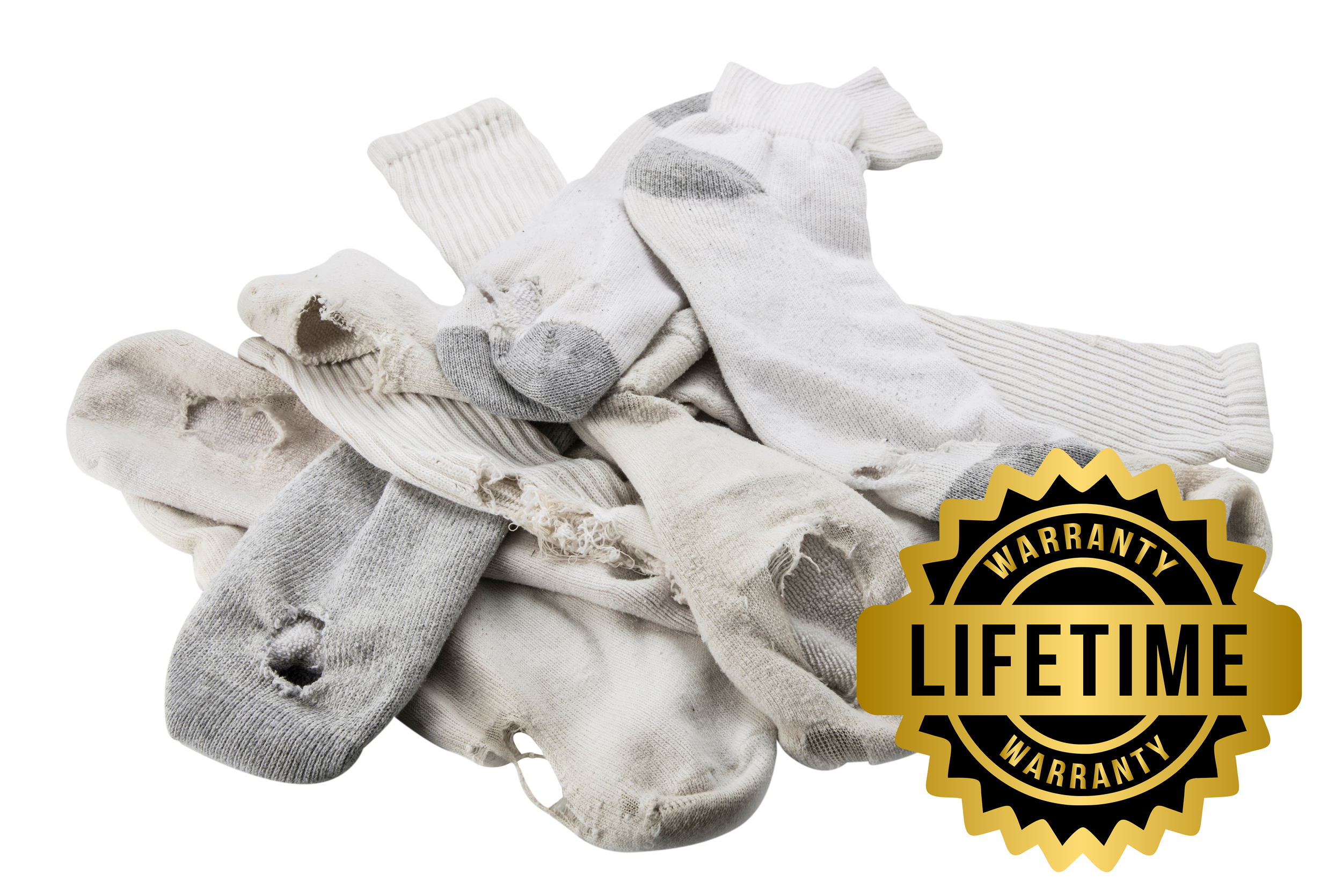
“Lifetime warranty” is one of the most compelling phrases in marketing.
It signals confidence in the product. It communicates durability. It reassures customers that the company stands firmly behind what it sells. In crowded markets, that promise can be a powerful competitive differentiator.
However, the phrase also carries risk when expectations and intent begin to drift apart.
Consider the example of a customer who owns socks with a lifetime warranty. The socks are worn regularly for years—until they are thin, stretched, and eventually develop holes. At that point, the customer returns to the store and requests a new pair because the original pair “did not hold up.” Technically, the warranty allows replacement. From a sustainability perspective, the situation becomes more complex.
In another instance, a professional shared on LinkedIn how a retail store replaced a ten-year-old bag that had begun to peel after years of use. The store immediately provided a free replacement. The customer publicly praised the company’s exceptional service and loyalty to its brand promise.
Both stories generate positive impressions. Both highlight companies that honor their guarantees. Yet they also raise an important strategic question: at what point has a product simply delivered its full and reasonable lifespan?
The Tension Between Marketing and Sustainability
Most lifetime warranties are designed to protect against manufacturing defects or premature failure. They are not typically intended to provide perpetual replacement after normal wear and tear. A product that has served effectively for a decade has likely fulfilled its intended value proposition.
If every customer used products to the end of their natural lifespan and then claimed free replacements, the economics would quickly become unsustainable. Revenue would occur once. Replacement costs would accumulate indefinitely. Margins would compress. Cash flow would suffer.
The long-term viability of a lifetime warranty depends on the assumption of good faith usage.
When that assumption weakens, the business model becomes exposed.
Generosity and Its Operational Cost
There is no question that honoring generous warranty policies builds brand goodwill. Public praise, especially in digital spaces, reinforces reputation. Stories of companies standing behind their products create powerful marketing momentum.
However, generosity without defined limits can quietly undermine resilience.
Warranty programs must account for:
Cost per replacement
Expected product lifespan
Abuse and fraud rates
Administrative overhead
Brand perception impact
Long-term cash flow modeling
When policy language is broad but operational safeguards are weak, companies risk creating unintended incentives. Customers may begin to interpret “lifetime” as “unlimited replacement,” regardless of product age or use intensity.
Exceptional service can gradually shift into baseline expectation.
Incentives Shape Behavior
Every policy creates behavioral signals. If customers learn that heavy use over many years still qualifies for free replacement, some will maximize that benefit. While not illegal or technically dishonest, this approach reflects a transactional mindset rather than a partnership mindset.
Businesses must ask whether their policies encourage responsible use or reward exploitation.
The sock example illustrates this clearly. Wearing a product for years until it physically deteriorates and then replacing it under warranty may align with policy language, but it strains the spirit of sustainability. When multiplied across thousands of customers, such behavior materially impacts cost structure.
The bag example demonstrates another side of the equation. The company likely absorbed the replacement cost because the brand equity gained outweighed the individual expense. Strategic generosity can be wise. Unbounded generosity is not.
The Strategic Definition of “Lifetime”
In many industries, “lifetime” refers to the lifetime of the product, not the lifetime of the customer. That distinction is critical. Ambiguity may strengthen marketing appeal but weakens operational clarity.
Clear definitions protect:
Customer trust
Brand consistency
Financial stability
Internal decision-making
Strong organizations align marketing promises with actuarial data and product engineering realities. Durable goods require durable modeling.
Reputation vs. Resilience
Businesses often face a tradeoff between short-term reputation gains and long-term resilience. Replacing a ten-year-old bag generates applause. Replacing thousands of similar claims can destabilize margins.
The goal is not to eliminate generosity. The goal is to ensure generosity is sustainable.
Effective warranty strategy includes:
Precise policy language
Transparent exclusions for normal wear
Consistent enforcement
Data-driven review of claims patterns
Ongoing cost analysis
Standing behind a product is admirable. Designing a system that can support that stance for decades is leadership.
The Bigger Business Lesson
The stories of the socks and the bag are not merely anecdotes about customer behavior. They illustrate a broader tension in modern business: the pressure to promise permanence in a culture built on replacement.
A lifetime warranty is a bold statement. It communicates confidence. Yet confidence must be backed by disciplined forecasting, durable product design, and cultural clarity about what the promise truly means.
The most sustainable brands balance integrity with realism. They honor defects. They protect against premature failure. They reward customer loyalty. At the same time, they recognize that every product has a lifecycle and every policy has a cost structure.
A warranty is not simply a marketing tool. It is a financial commitment, a cultural signal, and a strategic decision.
The companies that thrive long term are not those that promise the most. They are the ones that design promises they can keep.
